Why the future of mission belongs to relationships, not solo efforts
Some mission work is still imagined like a stage. A few people are visible. A few people are centered. The story is simple. The roles are clear. Some arrive to help; others receive help. But real mission (the kind that lasts) looks much more like a table. And at that table, no one works alone.
At Helping Children Worldwide, one of the values that shapes our vision for ethical mission is radical collaboration.
Radical collaboration means rejecting the fantasy that one church, one team, one donor, or one outside organization can solve complex problems by itself. It means understanding that mission is not strongest when one group takes the lead and everyone else falls in line. It is strongest when relationships are deep, roles are shared, wisdom is pooled, and responsibility is carried together.
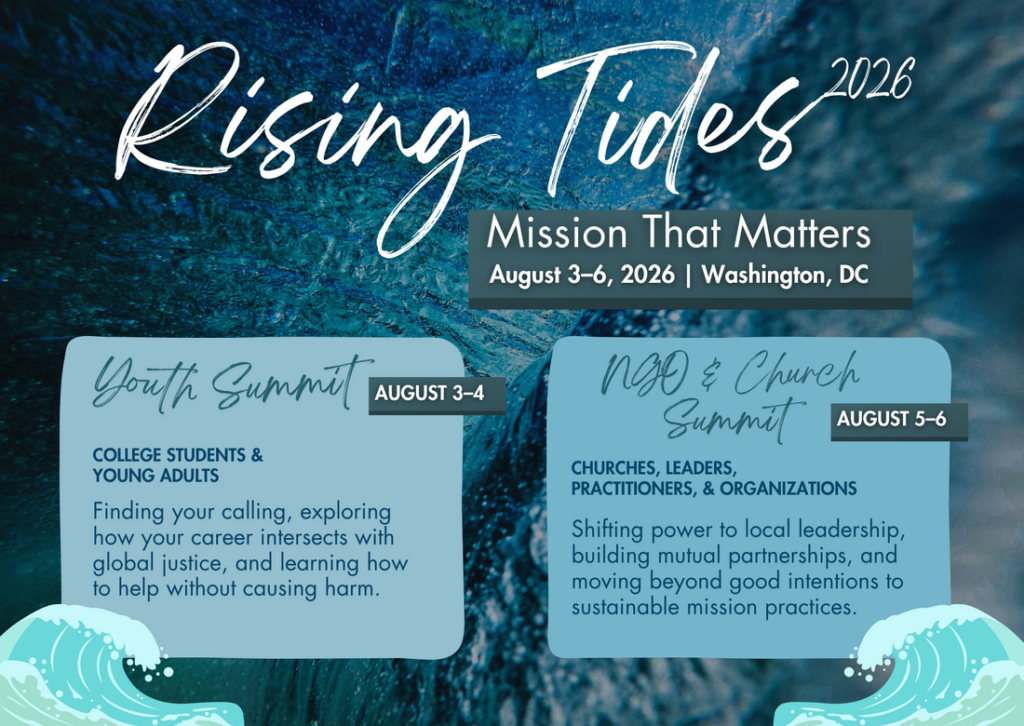
That is the kind of mission HCW’s Rising Tides 2026: Missions That Matter conference is designed to explore.
The challenges people and communities face are layered and complex. Child well-being, public health, poverty, education, family strengthening, community development, and faith formation do not exist in separate boxes. They overlap. They affect one another. And they cannot be addressed well through isolated effort or short-term mission trips or one-time interventions.
Radical collaboration begins with humility. It recognizes that no one sees the whole picture alone. Local leaders bring lived experience, local knowledge, context, and long-term presence. Outside supporters may bring resources, networks, or specialized skills. Churches bring relationships, spiritual formation, and commitment. Clinicians, educators, social workers, and community leaders each bring different forms of expertise.
Mission that matters makes room for all of that.
It does not flatten differences. It does not erase responsibility. It does not pretend collaboration is always easy. In fact, collaboration can be demanding. It requires listening, shared decision-making, patience, accountability, and the willingness to stay in relationship when things get complicated. It means making room for disagreement. It means letting go of control. It means resisting the urge to simplify the work just so it fits neatly into a report, a trip, or a fundraising story. But that is exactly why collaboration matters.
In global public health, collaboration means strengthening local systems, not bypassing them. In child and family work, it means bringing together community leaders, service providers, families, faith communities, and local professionals in ways that protect children and preserve belonging. In international development, it means recognizing that durable solutions are built with communities, not dropped into them. And in faith-based mission, radical collaboration reminds us that the global Church is not divided into heroes and projects, senders and receivers, experts and beneficiaries. We belong to one another. We need one another. The work is shared.
Mission that matters is not performative. It is relational. It is accountable. It is built over time. And it is always stronger when it is shaped by many voices instead of one.
That is why Rising Tides matters. Because the future of mission will not be built by isolated effort, polished visibility, or one-sided solutions. It will be built through long-term relationships, honest partnership, and collaboration strong enough to carry complexity.
Come to the table. Come ready to listen. Come ready to learn. Come ready to build with others.
Come ready to imagine mission as shared work rooted in dignity, humility, and mutual commitment. Because the best mission work is not a solo act. It is a collaborative one.
Join us at Rising Tides and be part of a conversation about radical collaboration, faithful partnership, and mission relationships strong enough to last.